
- July 20, 2026
- Posted by: bbe_2021
- Category: blog
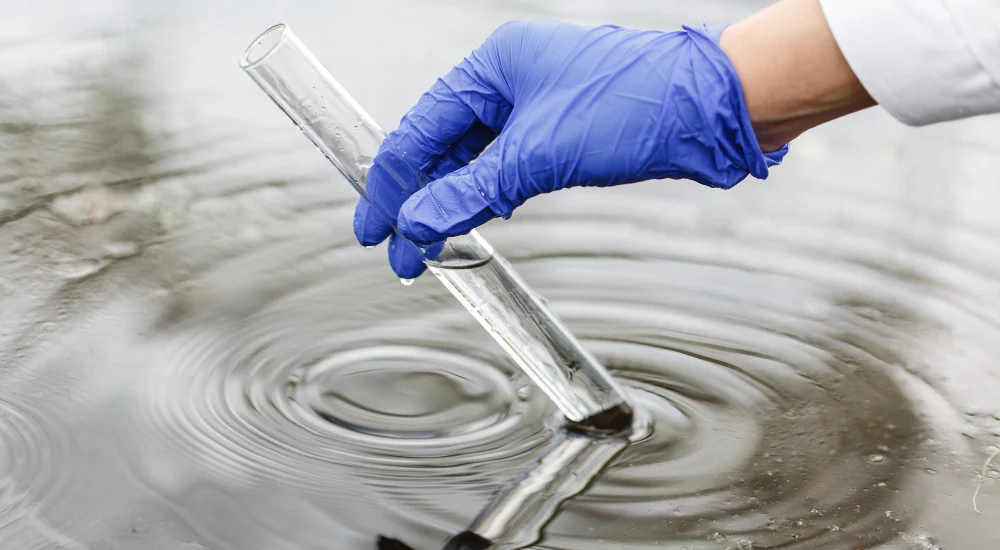
When you are planning such an important laboratory procedure as water analysis, the price is always one of the first and most logical questions. The exact cost is individual and directly depends on the number and type of parameters to be tested (chemical, bacteriological characteristics). A comprehensive water quality analysis in Tbilisi is fully available, and the final rate varies according to the complexity of the chosen package. Timely testing is the main guarantee of ensuring your health and safety.
Order Your Analysis With Us
Accurate Results · Certified Laboratory
In everyday life, we often consume tap, borehole, or other source water without even thinking about its real, microscopic composition. For many people, clean water is associated only with transparency, yet the reality is far more complex. Even a liquid that looks perfectly clean may contain invisible microorganisms, heavy metals, or toxic chemical compounds that are extremely dangerous for our body. When people begin to become aware of these risks, the phrase most frequently searched in search engines is – water analysis price. This is natural, because at the stage of caring about quality, planning the financial part is essential. In this extensive and detailed blog, we will discuss which specific factors determine the cost of the service, where water analysis is done in compliance with international standards, what parameters the testing covers, and why this process represents the best investment for your and your family’s future.
Why is water quality analysis necessary?
Before we talk directly about how much water analysis costs, it is important to understand the essence of the problem. Water quality is not merely an aesthetic or taste-related matter; it has a direct and powerful impact on our physiology, life expectancy, and the proper functioning of household infrastructure.
Impact on health: Chronic consumption of contaminated water causes acute intestinal infections, allergic reactions, skin diseases, and weakening of the immune system. Even more dangerous is contamination with heavy metals (for example, lead, arsenic, mercury), which accumulate in the body and, after years, cause irreversible damage to the nervous, cardiovascular, and reproductive systems. A child’s body is especially sensitive to these harmful substances.
Impact on appliances and infrastructure: If your home has so-called “hard water” (which is rich in calcium and magnesium ions), it quickly produces solid scale. Scale damages washing machines, dishwashers, central heating boilers, and pipes. Repairing or replacing appliances costs far more than prevention in advance. Accordingly, when you think about the service – water analysis, the price is in reality much lower than the loss that unfiltered water will cause you.
What stages does water analysis consist of and how much does it cost?
In order to precisely determine what financial resources the procedure requires, we must distinguish between the two main directions of laboratory testing. When you are interested in the water analysis price, you should know that the rate is formed precisely by the sum of these two components, or by the choice of one of them.
1. Physical-chemical testing
This stage studies the chemical composition and physical properties of the water. A standard, basic chemical water quality analysis includes the testing of the following parameters:
pH (acidity): shows how acidic or alkaline the water is. The ideal value ranges from 6.5 to 8.5.
Total hardness: determined by the concentration of calcium and magnesium. High hardness dries out the skin and damages appliances.
Iron and manganese: their excess amount gives the water a yellowish, rusty tint, a specific metallic taste and smell.
Nitrates and nitrites: especially dangerous for boreholes located near agricultural zones. Nitrates get into the ground from fertilizers and sewage, which, when entering the body, causes oxygen starvation.
If the customer requests broad testing (for example, for heavy metals, radioactive isotopes, or pesticides), naturally the requested water analysis price increases, because the process requires far more expensive reagents and complex laboratory equipment.
2. Microbiological (bacteriological) testing
Chemical cleanliness does not mean that the water is safe to drink. Bacteriological water analysis is vitally important for detecting pathogens. In the laboratory, the following are mainly tested:
Total coliform bacteria: their presence directly indicates that surface contamination or soil particles have entered the water.
E. coli (intestinal bacterium) and fecal streptococci: the detection of these bacteria is a catastrophic signal. It means that fecal matter has entered the water (for example, from a damaged sewage pipe or a septic tank). Drinking such water is categorically prohibited without strict sterilization.
Bacteriological testing requires a certain period of time (an incubation period of 24 to 72 hours) so that the bacterial cultures grow properly and their identification becomes possible.
Where is water analysis done in Tbilisi?
When we analyze the dangers, customers’ main concern becomes finding a reliable institution. Many ask where water analysis is done with the greatest accuracy and which laboratory’s result can be trusted. Numerous state and private laboratories operate in Tbilisi.
To make the right choice, you should pay attention to several criteria:
Accreditation (ISO 17025): This is the main standard that confirms that the laboratory’s equipment, methodology, and personnel qualification comply with international norms.
Modern equipment: The latest spectrometers and chromatographs ensure maximum accuracy of the data.
Consultation: A good laboratory not only hands you a dry sheet full of terms, but also explains to you what these numbers mean for your health.
If you are interested in the comprehensive water analysis price, our team is ready to offer you full support. We collaborate with leading, certified laboratories, which gives you the guarantee that each piece of data is absolutely reliable.
The sampling process – a critical step for an accurate result
Many people do not know that accurate water quality analysis begins not in the laboratory, but at the very moment of taking the sample. If the sample was taken incorrectly, in a non-sterile environment, even the most expensive equipment will show an erroneous result.
It is essential to follow the rules below (or entrust this process to professionals):
For chemical testing: a clean plastic or glass bottle of mineral water is used (under no circumstances a sweet, carbonated drink bottle). Water should flow from the tap for 10-15 minutes, so that the water stagnated in the pipes is cleared out. The bottle should be filled to the brim, so that no air remains inside (oxygen may change the chemical values).
For bacteriological testing: only a special, pre-sterilized glass or plastic container issued by the laboratory is used. The tap head (nozzle) must necessarily be treated with alcohol or scorched with a flame, so that microbes present on the outside do not contaminate the sample.
It is precisely because of these nuances that many customers choose the “on-call” service. Despite the fact that calling a specialist to the location slightly changes the situation and the water analysis price increases a little, in return you receive a 100%, risk-insured result. Transportation must also be carried out quickly, with strict observance of the temperature regime (a thermal container).
What happens after the testing? – Selecting a filtration system
Knowing the diagnosis does not solve the problem. If the conclusion showed that the chemical or bacteriological parameters exceed the established national or European norms, you must act immediately.
Today there are numerous engineering solutions on the market that deal with any type of contamination. It is important to understand that there is no “one universal filter for everything.” A filtration system is selected only and exclusively on the basis of laboratory results:
Mechanical filters: retain sand, rust, and coarse impurities.
Softening systems: use ion-exchange resins to reduce hardness (calcium, magnesium).
Iron and manganese removal stations: essential for most boreholes.
Reverse Osmosis systems: an ultra-modern technology that purifies water at the molecular level, removing heavy metals, nitrates, and toxins.
Ultraviolet (UV) sterilizers: destroy bacteria and viruses without the use of chemicals.
If you want healthy, safe, and ideally mineral-balanced drinking water to come out of your tap, our experts will help you. We will decode your laboratory conclusion in detail and select for you exactly the equipment that solves your specific problem, without extra expenses and the installation of unnecessary systems.
Do you still have additional questions related to procedures, deadlines, or rates? Our team of professionals with many years of experience is ready to provide you with a full, free initial consultation.
Call us at 599 27 00 49